The story of the still small voice begins far from any quiet cave, on a crowded mountain where one prophet stood against hundreds. Elijah lived in the northern kingdom of Israel during the reign of King Ahab, in the 9th century BC. His Hebrew name means “My God is Yahweh.” In fact, his whole life seems to echo that name. He boldly called Israel back to the Lord. Yet the same man who saw fire fall from heaven later sat alone and discouraged. His journey shows us how gently God cares for tired servants.
Elijah and a Kingdom Torn Between Two Gods
By Elijah’s day, the kingdom once united under Solomon had split in two. Israel lay to the north, and Judah kept Jerusalem and its Temple in the south. King Omri of Israel drew worship away from Jerusalem. He also arranged a marriage between his son Ahab and Jezebel, a princess of Sidon who worshipped Baal. As a result, tensions grew sharper. Ahab built a temple for Baal, and Jezebel brought many prophets of Baal and Asherah into the land.
Then Elijah the Tishbite stepped forward. He warned Ahab of a drought so severe that not even dew would form. This warning carried a sharp point, because people saw Baal as the god of rain, thunder and dew. So Elijah challenged Baal, Jezebel, Ahab and the people all at once. Afterward, God hid him by the brook Chorath, where ravens fed him. When the brook dried up, God sent him to a widow in Zarephath. Her flour and oil did not run out, and God even restored her son to life. Long before he heard the still small voice, Elijah was learning that God provides in hidden places.
The Contest on Mount Carmel
After more than three years of drought, God told Elijah to return to Ahab. On the way he met Obadiah, the head of Ahab’s household. Obadiah had hidden a hundred prophets from Jezebel’s violent purge. When Ahab finally faced Elijah, he called him the “troubler of Israel.” However, Elijah answered that Ahab himself troubled Israel by allowing the worship of false gods.
Elijah then asked Ahab to gather the people at Mount Carmel, along with 450 prophets of Baal and 400 prophets of Asherah. Carmel is a coastal mountain range in northern Israel. Its northeastern face rises as a steep ridge, and the Jezreel Valley lies just beyond it. Today some still call it Mount Mar Elias, meaning Mount Saint Elijah. There Elijah rebuked the people for wavering between two opinions. If the Lord is God, he said, they should follow him.
Next, he proposed a simple test. Each side would prepare a bull and lay it on wood without lighting a fire. The prophets of Baal prayed from morning to noon, yet nothing happened. At noon Elijah mocked them, suggesting their god was busy, travelling or asleep. So they shouted louder and cut themselves with swords and knives. They kept going until evening, but no answer came. This frantic noise stands in sharp contrast to the still small voice Elijah would hear later.
Fire From Heaven Before the Still Small Voice
When his turn came, Elijah repaired the Lord’s altar with twelve stones, one for each tribe of Israel. He dug a trench around it and prepared the second bull. Then he had people pour water from four large jars over the offering three times. In the end, water filled even the trench. At the time of the evening sacrifice, Elijah prayed to the God of Abraham, Isaac and Israel.
“Hear me, O LORD, hear me, that this people may know that thou art the LORD God, and that thou hast turned their heart back again.” (1 Kings 18:37)
God answered at once. In other words, the prayer that Baal’s prophets could not win in a whole day, Elijah’s God answered in a moment.
“Then the fire of the LORD fell, and consumed the burnt sacrifice, and the wood, and the stones, and the dust, and licked up the water that was in the trench. And when all the people saw it, they fell on their faces: and they said, The LORD, he is the God; the LORD, he is the God.” (1 Kings 18:38-39)
It was a moment of public triumph. Still, the greatest lesson of Elijah’s life would not come through fire. Instead, it would come through the still small voice.
A Weary Prophet Alone in a Cave
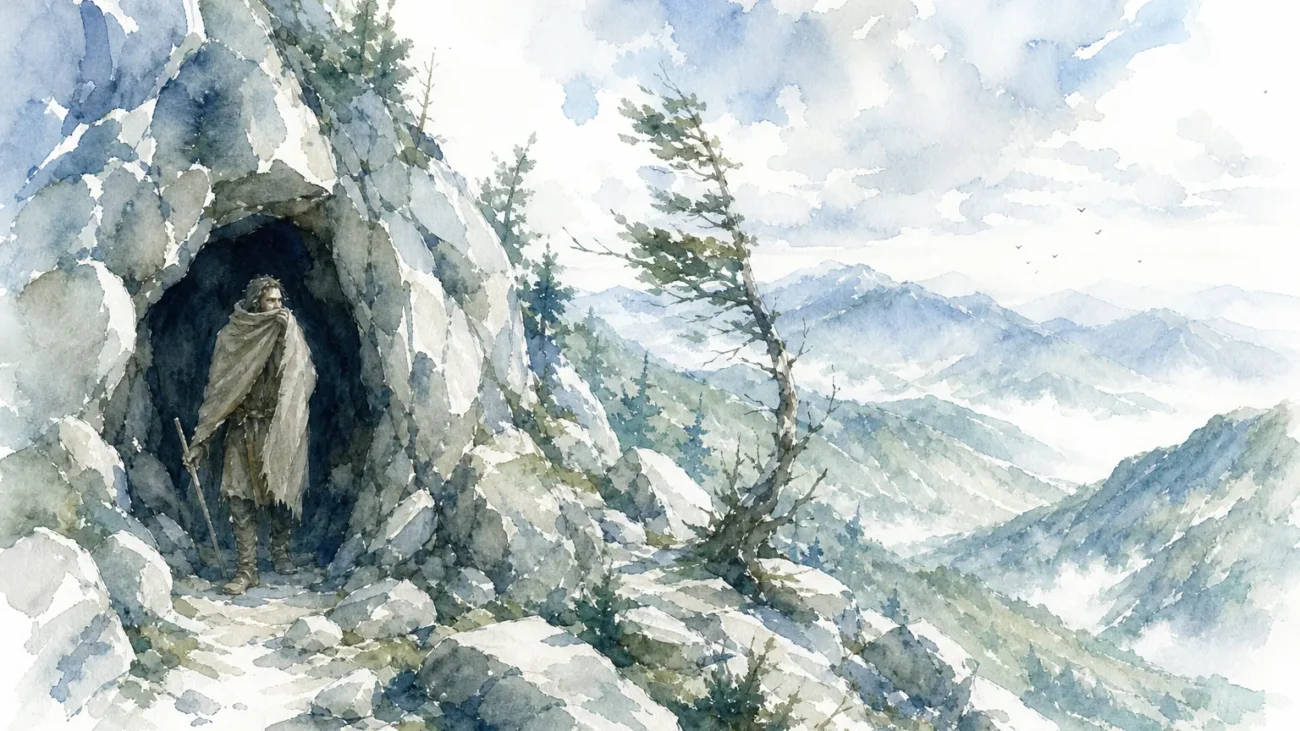
Later, the story finds Elijah far from the cheering crowd. He came to a cave and lodged there. Then the word of the Lord came to him with a searching question: “What doest thou here, Elijah?” (1 Kings 19:9). The question was not harsh. Rather, it invited the prophet to open his heart.
Elijah answered with deep discouragement. He said he had been very jealous for the Lord. Israel had forsaken the covenant, torn down God’s altars and killed his prophets. Above all, he felt completely alone: “I, even I only, am left; and they seek my life, to take it away” (1 Kings 19:10). The hero of Carmel now felt hunted and empty. Yet God did not scold him. First, God called him out of the cave to meet him. Only then would Elijah hear the still small voice.
Wind, Earthquake, Fire and the Still Small Voice
God told Elijah to stand on the mount before the Lord. Then the Lord passed by. A great and strong wind tore at the mountains and broke the rocks in pieces. However, the Lord was not in the wind. Next came an earthquake, but the Lord was not there either. After that a fire came, and again the Lord was not in it.
“And after the earthquake a fire; but the LORD was not in the fire: and after the fire a still small voice.” (1 Kings 19:12)
When Elijah heard it, he wrapped his face in his mantle. Then he went out and stood at the entrance of the cave. Once more a voice asked him, “What doest thou here, Elijah?” (1 Kings 19:13). Fire had fallen on Carmel, and God had answered with power. Yet here God chose to speak softly. Similarly, he asked the same patient question twice. He gave his servant room to come near.
Listening for the Still Small Voice Today
Elijah’s journey moves from a blazing altar to a quiet cave. Both moments reveal the same faithful God. On Carmel, the Lord showed his power before a whole nation. In the cave, he drew near to one tired man. Therefore we need not fear that our weariness pushes God away.
Perhaps you also feel that you alone are left. If so, Elijah’s story invites you to step out and listen. God may not come in the storm you expect. Instead, he may meet you in the still small voice, asking gently what weighs on your heart. So be still before him, and let him speak.
