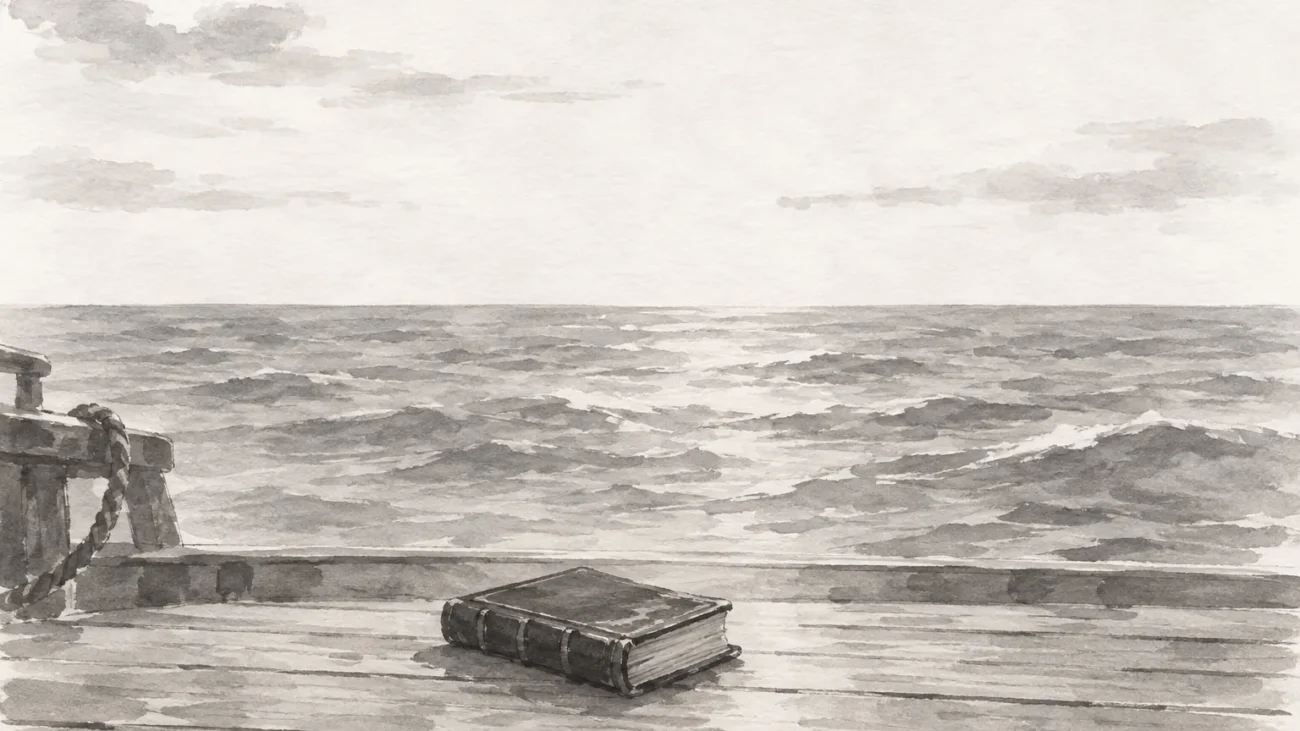
The Geneva Bible appeared in its first full edition in 1560, and it soon became one of the most significant English translations of Scripture. Readers sometimes call it the Breeches Bible. It came before the Douay–Rheims Bible by 22 years and the King James Version by 51 years. In fact, it shaped the faith of households, famous writers and ocean travelers alike. Its story shows how God’s Word reached people in troubled times.
How the Geneva Bible Began in Exile
The story begins in a time of danger. During the reign of Mary I, from 1553 to 1558, England returned to Catholicism and outlawed Protestantism. As a result, a number of English Protestant scholars fled to Geneva. At that time Geneva was a republic. John Calvin and later Theodore Beza gave the city its spiritual and theological leadership.
Among the exiles was William Whittingham, who supervised the translation we now call the Geneva Bible. He worked with Myles Coverdale, Christopher Goodman, Anthony Gilby, Thomas Sampson and William Cole. Whittingham took direct responsibility for the New Testament, which appeared in 1557. Meanwhile, Gilby oversaw the Old Testament. Then, in 1560, printers in Geneva produced the first full edition.
Getting the book into England required help. Sir Rowland Hill of Soulton smoothed its introduction. Tradition names him as the publisher; however, modern scholarship stresses his role as a patron and legal protector. As a Commissioner for Ecclesiastical Causes under Elizabeth I, he could authorize its circulation. Still, English printers did not produce it until 1575 for the New Testament and 1576 for the complete Bible.
What Made the Geneva Bible Different
First, the Geneva Bible was the first complete English version translated entirely from the original languages of Hebrew, Aramaic and Greek. Its text largely revised the earlier work of William Tyndale. Yet Tyndale had fully translated only the New Testament. In the Old Testament, he reached 2 Chronicles before his imprisonment. So the refugees in Geneva completed the first translation of the Old Testament from Hebrew into English.
In addition, the book was easier to read. Earlier English Bibles used Gothic script, but the Geneva Bible used Roman type. It also came in convenient and affordable sizes. The 1560 edition was a quarto, while printers also issued pocket-size octavo editions and a few large folios. The smallest New Testament had a type area of only 70 by 39 millimeters.
Readers loved its language, too. Because its English was forceful and vigorous, most people strongly preferred it to the Great Bible. Cleland Boyd McAfee put it this way: “it drove the Great Bible off the field by sheer power of excellence.” Over 150 editions followed, and the last probably appeared in 1644.
Marginal Notes and a King’s Displeasure
The annotations formed a significant part of the Geneva Bible. These notes had a Calvinist and Puritan character. For this reason, the ruling Anglicans of the Church of England disliked them. King James I disliked them as well. In fact, his objection targeted not the translation itself but the notes in the margins.
James felt that many notes were “very partial, untrue, seditious, and savoring too much of dangerous and traitorous conceits.” Some notes even spoke of monarchs as “tyrants.” For example, a note on Daniel 6:22 explains that Daniel disobeyed the king’s wicked command in order to obey God. Similarly, a note on Exodus 1:19 calls the disobedience of the Hebrew midwives lawful.
As a result, James commissioned the Authorized Version, or King James Bible, to replace it. Earlier, the same concern had also motivated the Bishops’ Bible under Elizabeth I. Even so, Puritans kept reading the Geneva Bible until after the English Civil War. Surprisingly, a few editions of the King James Version still carried the Geneva notes as late as 1715.
From Shakespeare’s England to the Mayflower
The Geneva Bible became the primary Bible of late 16th-century English Protestantism. William Shakespeare used it, and so did John Donne, John Knox and Oliver Cromwell. Later, Cromwell’s soldiers still respected it during the English Civil War, through a booklet called The Souldiers Pocket Bible.
Its influence reached Scotland too. The first Bible printed in Scotland was a Geneva edition, issued in 1579. That same year, a Scottish law required every household of sufficient means to buy a copy. Because Knox and Calvin had a hand in its creation, the book held a special appeal there.
Above all, the Geneva Bible crossed the ocean. Travelers took it to America on the Mayflower, along with other Bibles. Today Pilgrim Hall Museum holds several Bibles that belonged to Mayflower passengers. Later still, its frontispiece inspired Benjamin Franklin’s design proposal for the first Great Seal of the United States.
A Psalm of Thanksgiving for Weary Travelers
Few passages speak to travelers like Psalm 107. The words below come from the King James Version, the translation King James commissioned to replace the Geneva Bible. Even so, the song of thanks remains the same for every reader.
“O give thanks unto the LORD, for he is good: for his mercy endureth for ever.” (Psalm 107:1)
Next, the psalmist describes people who wandered in the wilderness and found no city to live in. They grew hungry and thirsty, and their soul fainted within them. So they cried to the Lord in their trouble, and he delivered them from their distresses.
“And he led them forth by the right way, that they might go to a city of habitation.” (Psalm 107:7)
Finally, the psalm calls everyone to praise the Lord for his goodness and his wonderful works. Then it gives the reason: he satisfies the longing soul and fills the hungry soul with goodness (Psalm 107:9).
Giving Thanks with the Geneva Bible Readers
The Geneva Bible reminds us that Scripture has often traveled with people far from home. Exiles in Geneva produced it, and travelers carried it across the sea. Similarly, Psalm 107 speaks of the redeemed whom the Lord gathered from the east, the west, the north and the south.
So today, whatever wilderness you face, this psalm invites you to cry out to the Lord and trust his leading. It also invites you to give thanks, because his mercy endures forever. In other words, the story of the Geneva Bible and the words of the psalm point to the same faithful God.
