William Tyndale gave English readers something they had never held before: a New Testament translated straight from the Greek and printed for ordinary people. He was born around 1494 and became a gifted scholar, a bold reformer and, in the end, a martyr. In fact, his work shaped the English Bible for generations. Many readers still meet his translation choices whenever they open an English Bible. This article follows his life, his labor over the Scriptures and the costly faithfulness of his final years.
The Early Years of William Tyndale
Tyndale may have been born in Melksham Court, Stinchcombe, a village near Dursley in Gloucestershire. His family also used the name Hychyns, and he enrolled at Magdalen Hall, Oxford, under that name. First, he attended Katharine Lady Berkeley’s School at Wotton-under-Edge. He then began at Oxford in 1506 and earned a Bachelor of Arts in 1512. In that same year he became a subdeacon. Later, in July 1515, he received his Master of Arts, and people regarded him as a man of unblemished life.
However, William Tyndale grew frustrated with the way the universities trained future theologians. Students spent years on other learning before they ever studied Scripture itself. He later mocked this system, complaining that no man could “look on the Scripture until he is modeled in heathen learning eight or nine years.” Between 1517 and 1521 he studied at Cambridge. Over the years he also became fluent in Latin, Greek and Hebrew, as well as French, German, Italian and Spanish. As a result, he had the tools for the great task ahead.
A Promise to the Boy Behind the Plow
Around 1521, Tyndale became chaplain in the home of Sir John Walsh at Little Sodbury in Gloucestershire. He also tutored the Walsh children. His views soon troubled other clergymen, so the next year John Bell, Chancellor of the Diocese of Worcester, summoned him. Yet no one brought formal charges against him at that time.
According to John Foxe, Tyndale then argued with a clergyman who claimed, “We had better be without God’s laws than the Pope’s.” William Tyndale reportedly answered with words that became famous:
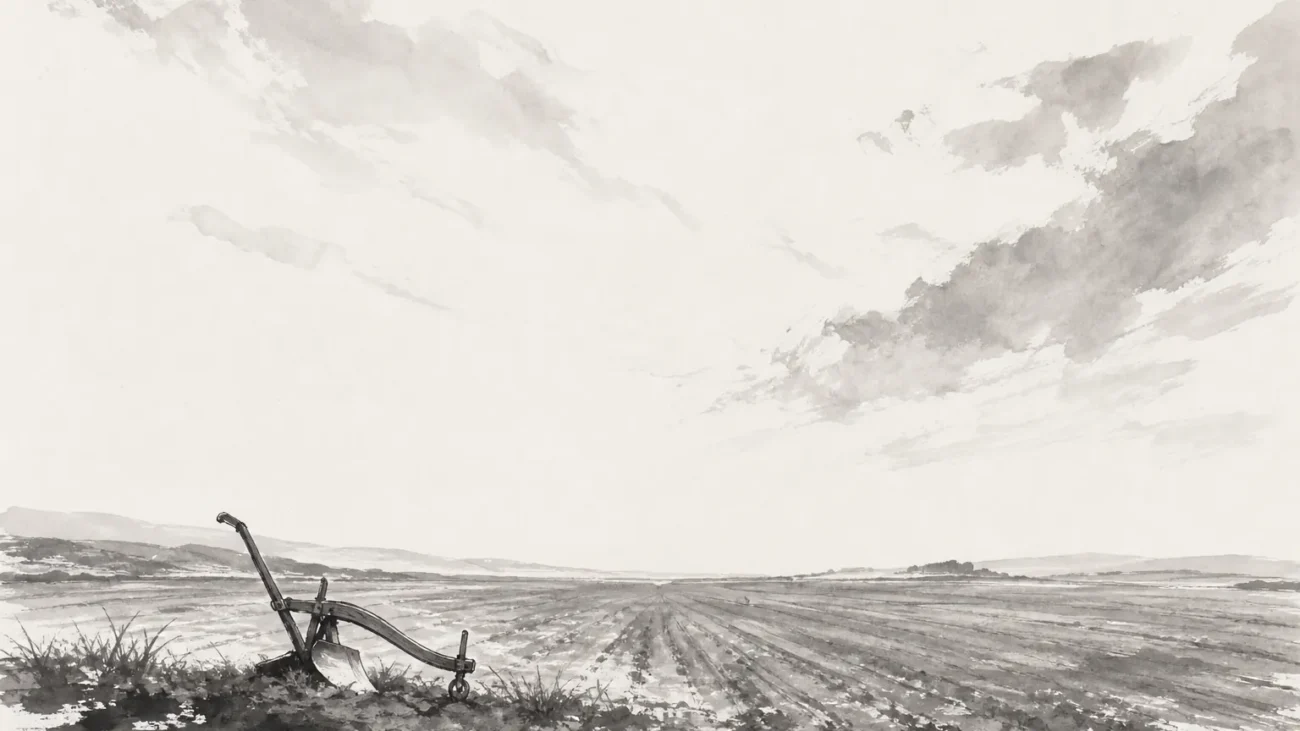
“I defy the Pope and all his laws; and if God spares my life, ere many years, I will cause the boy that driveth the plow to know more of the Scriptures than thou dost!”
So in 1523 he went to London to seek support and permission for an English Bible. He hoped to join the household of Cuthbert Tunstall, the Bishop of London, who had worked with Erasmus. However, Tunstall declined because his household was already full of scholars. Instead, Tyndale preached and studied in London with help from Humphrey Monmouth, a cloth merchant. He also lectured at St Dunstan-in-the-West on Fleet Street.
How William Tyndale Translated the New Testament from Greek
In the spring of 1524, Tyndale left England for continental Europe. He may have stayed first in Hamburg and then traveled on to Wittenberg. At this time he began translating the New Testament. Earlier, in 1522, he had obtained a copy of Martin Luther’s Bible. Besides Luther’s work, he used the Latin Vulgate and the Greek and Latin text that Erasmus had compiled from several Greek manuscripts. Erasmus had published the Koine Greek New Testament in 1516, and this opened the original language to scholars like Tyndale.
Printing began in Cologne in 1525, but someone betrayed Tyndale to the authorities, and he had to flee. Only a single fragment of that partial edition survives, and the British Library keeps it. Then, in 1526, Peter Schöffer the Younger published the first complete edition. Smugglers carried thousands of copies into England, yet only three survive. St Paul’s Cathedral in London, the British Library and the Württembergische Landesbibliothek in Stuttgart hold them. Tyndale also printed revised editions in 1534 and 1536.
In addition, William Tyndale did not stop with the New Testament. In 1530, printers in Antwerp published his Pentateuch, which he translated from Hebrew. His Book of Jonah followed the next year, and a revised Genesis appeared in 1534. He also translated the historical books from Joshua to Second Chronicles, though these have not survived in their original form.
Bold Word Choices and a Costly Faith
Tyndale’s translation challenged the church authorities of his day. For example, he rendered the Greek word ekklēsía as “congregation” rather than “church.” Similarly, he chose “elder” for presbúteros, after first using “senior.” He also wrote “repent” instead of “do penance” and “love” instead of “charity.” Thomas More, Lord Chancellor to Henry VIII, claimed that Tyndale had mistranslated on purpose. Meanwhile, Tunstall ordered his officials to buy up and burn copies of the 1526 New Testament.
William Tyndale also wrote other books. In The Obedience of a Christian Man (1528), he argued that the monarch, not the Pope, should control a nation’s church. Then, in 1530, The Practice of Prelates opposed Henry VIII’s plan to annul his marriage. As a result, he became an enemy of both state and church.
In 1535, the authorities arrested him and held him in the castle of Vilvoorde outside Brussels. There he spent almost a year and a half debating the Catholic theologian Jacobus Latomus through private books. In August 1536, a court declared him a heretic for his Lutheran views. Executioners strangled him and then burned his body. Notably, translating Scripture was not a crime in the Low Countries. Instead, the authorities condemned him for spreading Lutheran teaching.
How William Tyndale Lives On in English Bibles
William Tyndale never published a complete English Bible. Yet his work did not die with him. Myles Coverdale translated the remaining Old Testament books and combined them with Tyndale’s work. Together, they formed the first complete printed English Bible in 1535. Then, in 1537, Tyndale’s associate John Rogers printed the Matthew Bible, which included Tyndale’s unpublished Old Testament books.
Later English editions adopted many of Tyndale’s translation choices, and his influence appears in the King James Version. His was also the first English translation to draw directly from Hebrew and Greek and the first to use the printing press. So when believers pray the Lord’s Prayer in the King James Version, they stand in a stream of English Scripture that he helped to begin:
“Our Father which art in heaven, Hallowed be thy name. Thy kingdom come. Thy will be done in earth, as it is in heaven.” (Matthew 6:9-10)
Likewise, the opening of John’s Gospel in that same version celebrates the Word through whom God speaks:
“In the beginning was the Word, and the Word was with God, and the Word was God.” (John 1:1)
A Light That Shines in the Darkness
The story of William Tyndale reminds us that God’s Word is a treasure worth sharing. He wanted the boy behind the plow to know the Scriptures, and he gave his life for that hope. Today, many of us hold the Bible in our own language without fear.
John’s Gospel says of the Word, “And the light shineth in darkness; and the darkness comprehended it not” (John 1:5). Therefore, Tyndale’s life invites us to read that light gladly and to pass it on. Above all, it encourages us to pray, as Jesus taught, “Thy kingdom come.”
