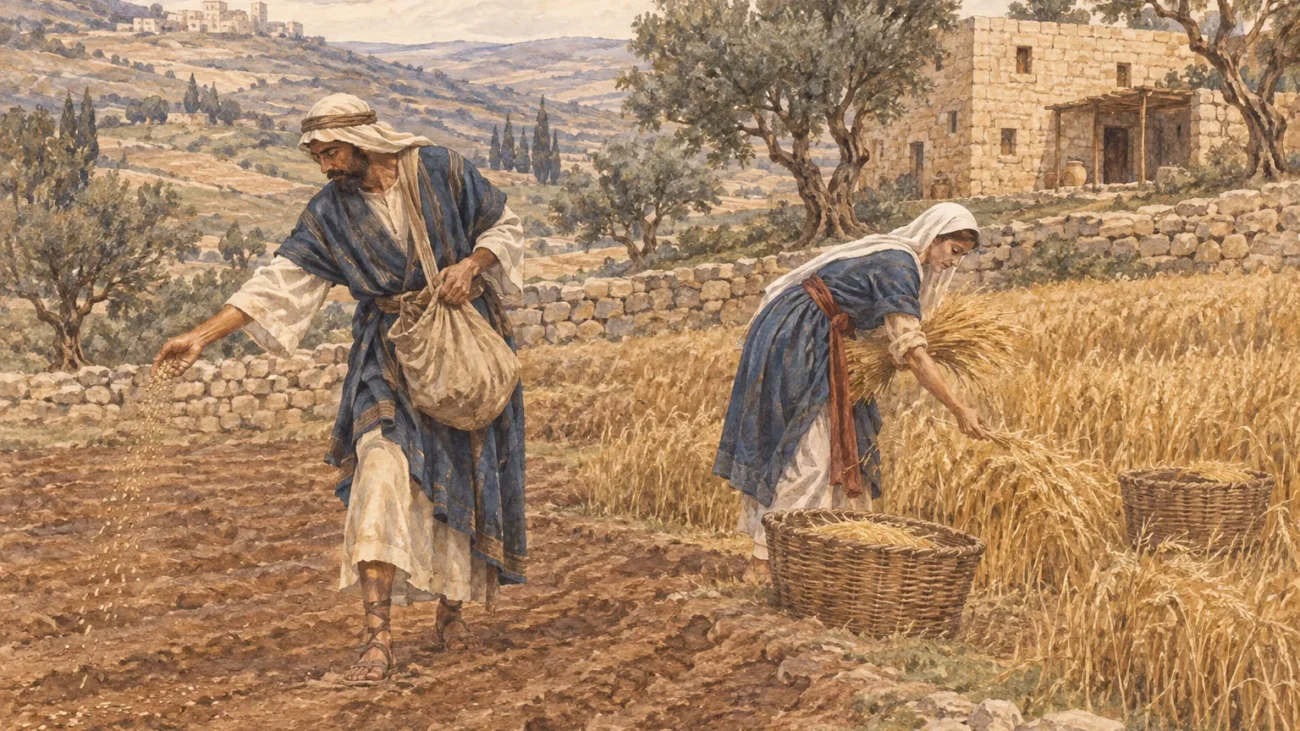
Ecclesiastes 3 opens with a poem about times and seasons. In a few short lines, the Teacher names the times that fill a human life, from birth to death and from weeping to dancing. Yet the poem does not stand alone. Instead, it belongs to a book that searches honestly for meaning. Above all, it leads to a quiet and hopeful insight: God makes everything beautiful in its time. So let us meet the Teacher, walk through his poem, and listen for what it says to us today.
Meeting the Teacher: An Introduction to Ecclesiastes
Ecclesiastes belongs to the Writings of the Hebrew Bible. Christians also read it as part of the wisdom literature of the Old Testament. Its English title comes, through Latin, from a Greek word. That Greek word translates the Hebrew name Kohelet, also spelled Qoheleth. In fact, both words relate to the idea of an assembly. Today most readers take Kohelet to mean someone who speaks before an assembly. For this reason, English Bibles often call him the Teacher or the Preacher.
The book opens with “the words of Kohelet, son of David, king in Jerusalem” (Ecclesiastes 1:1). Rabbinic tradition holds that King Solomon wrote it in his old age. However, many scholars point to Persian loanwords and Aramaic features in the Hebrew. As a result, they date the book no earlier than about 450 BCE and no later than 180 BCE. We do not need to settle that question to hear the message of Ecclesiastes 3. Meanwhile, an unnamed narrator frames the Teacher’s words and speaks again in the closing verses.
A Search for Meaning Under the Sun
The Teacher begins with a startling cry: “Vanity of vanities! All is futile!” Behind the word vanity stands the Hebrew word hevel, which means vapor or breath. Figuratively, it can describe something insubstantial, futile or meaningless. Then the Teacher asks the question that drives the whole book. What profit do we gain from all our toil under the sun?
Because death comes to the wise and the foolish alike, the Teacher finds no lasting gain in human effort. Yet he does not stop there. Instead, he urges people to enjoy simple daily gifts, such as eating, drinking and finding joy in work. These gifts, he says, come from the hand of God. In addition, the book invites us to watch the Teacher’s journey, not just his conclusions. Slowly he learns to accept the frustrations and uncertainties of life. Ecclesiastes 3 belongs to this journey.
The Poem of Times and Seasons in Ecclesiastes 3
The chapter begins with a simple and sweeping statement:
“To every thing there is a season, and a time to every purpose under the heaven” (Ecclesiastes 3:1).
Then the Teacher lists pairs of opposites in verses 2 to 8. First comes a time to be born and a time to die. Next he speaks of planting and uprooting, of tearing down and building up. Later he names times to embrace and to hold back, to keep and to throw away, to tear and to sew. Finally the list ends with love and hate, war and peace.
The poem in Ecclesiastes 3 does not hide the hard seasons. For example, it says plainly that there is “a time to weep, and a time to laugh; a time to mourn, and a time to dance” (Ecclesiastes 3:4). Grief has its place, and so does joy. Similarly, silence has its time, and speech has its time too.
Seasons We Can See in Creation
Ecclesiastes 3 speaks of human life, yet the world around us has its own rhythm. Trees and shrubs lie dormant through the winter, preparing for new buds and leaves. Likewise, the ground rests in the cold months when no fruit or vegetables grow. Then spring arrives and feels refreshing after the dreariness of winter. Birds build nests, cattle give birth, and flowers and trees bloom.
Later, after months of summer heat, people welcome the cooler days of fall and the colorful display of autumn leaves. Even dead leaves, then, can become a gift to our eyes. In the same way, the seasons of our lives keep changing. Some feel bare and others feel full.
Everything Beautiful in Its Time: The Heart of Ecclesiastes 3
After the poem, the Teacher returns to his great question. “What profit hath he that worketh in that wherein he laboureth?” (Ecclesiastes 3:9). He has seen the travail that God has given to the sons of men to be exercised in it. Then he speaks these words:
“He hath made every thing beautiful in his time: also he hath set the world in their heart, so that no man can find out the work that God maketh from the beginning to the end” (Ecclesiastes 3:11).
This verse holds two truths together. First, God has made everything beautiful in its time. Second, no one can find out the work that God makes from beginning to end. Indeed, the book describes people as subject to time, in contrast to God’s eternal character. The Teacher adds that whatever God does shall be for ever. Nothing can be put to it, nor taken from it, and God does it so that men should fear before him (Ecclesiastes 3:14).
Joy and Work as a Gift in Ecclesiastes 3
Between these two reflections, the Teacher offers practical wisdom. He knows that there is no good in them but for a man to rejoice and to do good in his life (Ecclesiastes 3:12). Then he goes further:
“And also that every man should eat and drink, and enjoy the good of all his labour, it is the gift of God” (Ecclesiastes 3:13).
So the meal on our table and the satisfaction of honest work are called gifts of God. The Teacher does say that people should not be greedy, yet he still encourages enjoyment while we can. The book closes with a call to fear God and keep his commandments.
Living Ecclesiastes 3 in Every Season
Perhaps you are planting right now, or perhaps you are watching something come down. Maybe you are weeping, or maybe you are dancing. Either way, Ecclesiastes 3 reminds us that there is a season to every purpose under heaven. We may not understand the whole story from beginning to end. Still, the text says that God has made everything beautiful in its time.
Let us receive today as a gift. We can eat our bread with thanks, do good where we stand, and enjoy the fruit of our labor. With that in mind, the message of Ecclesiastes 3 can become a quiet song for every season of life.
