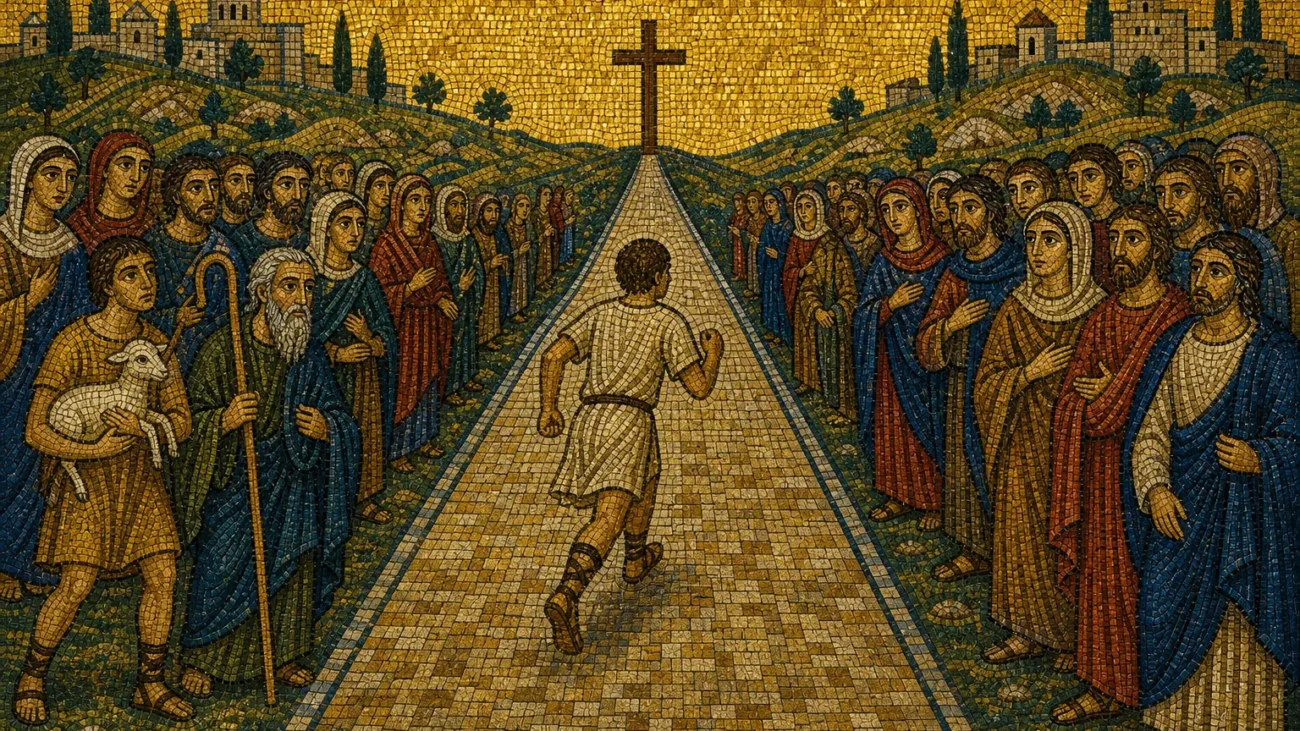
Hebrews 11 faith has inspired believers for centuries, because this chapter gathers people who trusted God when they could not see the outcome. We may picture it as a great hall of faith. In addition, the chapter leads straight into one of the most encouraging images in the New Testament: a cloud of witnesses surrounding those who still run. In this article, we look at the letter behind the chapter, the first portraits of Abel and Enoch, and the call to endure. Above all, we fix our eyes where the writer fixes them: on Jesus.
The Letter Behind Hebrews 11 Faith
The Epistle to the Hebrews is one of the books of the New Testament. Its text never names its author. Tradition attributed the letter to Paul the Apostle, and most ancient Greek manuscripts place it among his letters. However, modern scholars generally consider the author unknown. Over the centuries, scholars have suggested names such as Barnabas, Luke, Silas, Apollos, Clement of Rome, and Priscilla and Aquila. In the third century, Origen offered a humble conclusion: “Who wrote the epistle is known to God alone.”
Whoever held the pen, the letter had a clear goal. Its writer wanted to urge believers to persevere in the face of persecution. Some scholars think the first readers were Jewish Christians living in Jerusalem. At that time, some believers were thinking about turning back to escape persecution for believing Jesus was the Messiah. For this reason, the letter keeps presenting Jesus as the mediator between God and humanity. It also gives him titles such as “pioneer” or “forerunner”, Son and high priest. So Hebrews 11 faith grows out of a letter written to people tempted to give up.
What Hebrews 11 Faith Means
The chapter opens with a short and striking description of faith:
“Now faith is the substance of things hoped for, the evidence of things not seen.” (Hebrews 11:1)
In other words, faith gives present weight to what we hope for but cannot yet see. It treats hope as something solid. Then the writer adds that by faith “the elders obtained a good report” (Hebrews 11:2). These elders are the ancestors of faith whom the chapter goes on to introduce.
Next, the writer turns to creation itself. Through faith, he says, we understand that God framed the worlds by his word. As a result, what we see did not come from things that appear (Hebrews 11:3). Hebrews 11 faith therefore begins with trust in the God who speaks and creates. Before any hero steps forward, the reader learns that the whole universe rests on God’s word.
Abel and Enoch: The First Portraits
The first name in the gallery is Abel. By faith, Abel offered God a more excellent sacrifice than Cain did. Through that offering, Abel received witness that he was righteous, and God himself testified about his gifts. Then the writer adds a moving line: “by it he being dead yet speaketh” (Hebrews 11:4). In fact, Abel’s faith still speaks to every generation that reads his story.
Enoch comes next, and his story looks very different. Abel died, yet Enoch did not see death at all. The writer says that God took him away, so no one could find him (Hebrews 11:5). Before God took him, Enoch had a clear testimony: he pleased God. Together, these two men show that Hebrews 11 faith can take very different shapes in different lives. Yet in both cases, God noticed and approved the one who trusted him.
Why Hebrews 11 Faith Pleases God
Enoch’s testimony leads the writer to one of the central verses of the chapter:
“But without faith it is impossible to please him: for he that cometh to God must believe that he is, and that he is a rewarder of them that diligently seek him.” (Hebrews 11:6)
First, this verse tells us that faith stands at the heart of pleasing God. Second, it names two things that faith believes. The one who comes to God trusts that he exists. In addition, that person trusts that God rewards those who seek him diligently.
This truth brings real comfort. The verse does not describe a list of achievements. Instead, it describes someone who comes, believes and keeps seeking. Hebrews 11 faith is therefore relational at its core. It draws near to a living God and trusts him to reward those who seek him.
The Cloud of Witnesses and the Race
After presenting these examples of faith, the writer turns to his readers with a word of encouragement:
“Wherefore seeing we also are compassed about with so great a cloud of witnesses, let us lay aside every weight, and the sin which doth so easily beset us, and let us run with patience the race that is set before us” (Hebrews 12:1).
Here the heroes of Hebrews 11 faith become a great crowd of witnesses around the believer. Their lives testify that trusting God is worth it. So the writer gives three clear instructions. First, lay aside every weight. Next, put away the sin that clings so easily. Finally, run with patience the race set before us.
Above all, the writer tells us where to look. We look to Jesus, “the author and finisher of our faith” (Hebrews 12:2). For the joy set before him, Jesus endured the cross and despised its shame. Now he sits at the right hand of the throne of God. Then the writer explains why we should consider him: so that we do not grow weary and faint in our minds (Hebrews 12:3). This picture fits the purpose of the letter, because it calls tired and pressured believers to keep going.
Running Today with Hebrews 11 Faith
Hebrews 11 faith is not only a story about the past. Abel still speaks, Enoch’s testimony still stands, and the cloud of witnesses still surrounds those who follow Jesus. As a result, every believer can take courage from these lives.
Perhaps you feel weary today, as the first readers of Hebrews did. If so, look again at the one who endured the cross and now sits beside the throne of God. Lay aside what weighs you down. Then keep seeking God, trusting that he rewards those who diligently seek him. Step by step, with patience and with your eyes on Jesus, keep running the race set before you.
