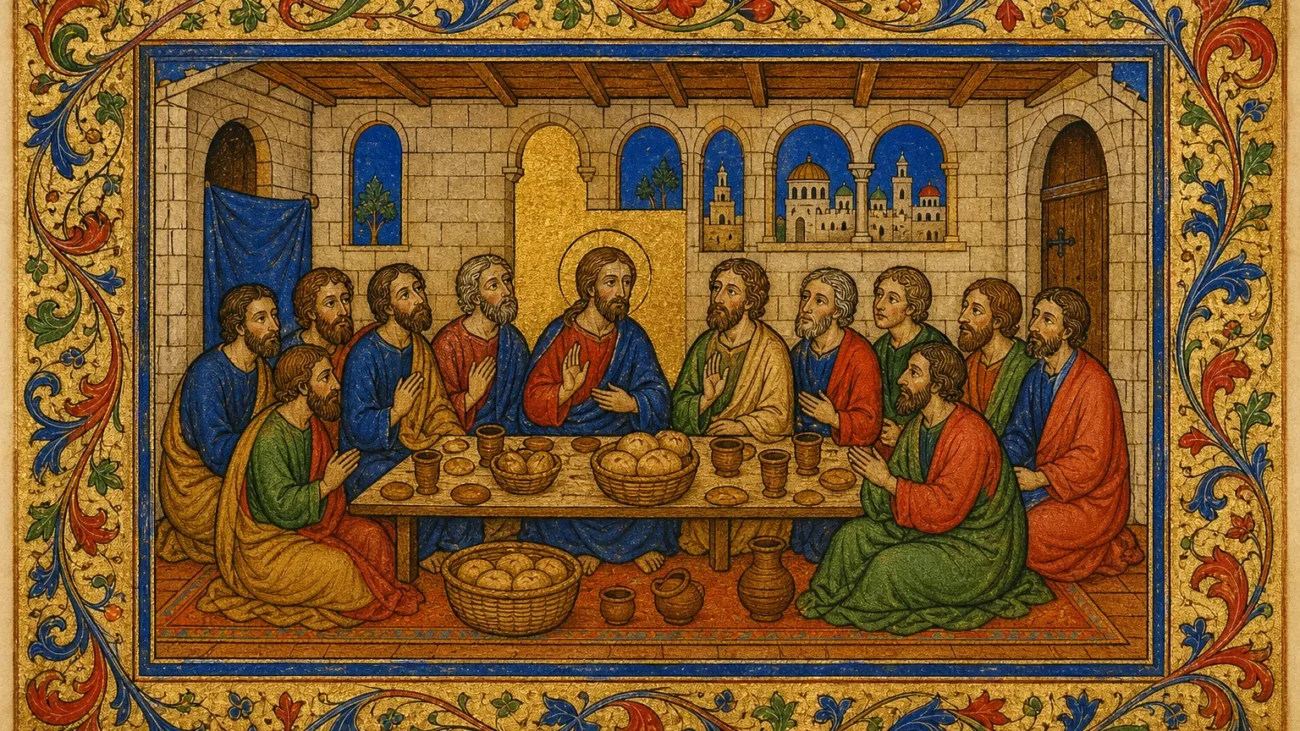
The Acts 2 church gives us one of the warmest pictures in the New Testament of believers living out their faith together. After the Holy Spirit came at Pentecost, a small band of disciples in Jerusalem quickly grew into a large and joyful community. In just a few verses, Acts shows how these believers learned, ate, prayed and shared their lives. As a result, their story still invites us to ask what true Christian fellowship looks like.
Pentecost and the Birth of the Acts 2 Church
The word Pentecost comes from a Greek term meaning “fiftieth.” For Jews, it pointed to Shavuot, the Feast of Weeks. This harvest festival fell on the fiftieth day after Passover. Exodus even calls it the “first fruits of the wheat harvest.” So when the disciples “were all together in one place” on the day of Pentecost, Jerusalem was full of pilgrims. In fact, Acts 2:5–11 mentions Jews from “every nation under heaven” in the city.
Then a “mighty rushing wind” came, and “tongues as of fire” appeared. About one hundred and twenty followers of Christ were present. They included the Twelve Apostles, Mary the mother of Jesus, other women disciples and his brothers. Peter stood up with the eleven and preached to the crowd. He quoted Joel 2:28–32 and Psalm 16, and he stressed the resurrection of Jesus. Christian tradition calls Pentecost the “Birthday of the Church,” and the Acts 2 church truly began that day.
“Then they that gladly received his word were baptized: and the same day there were added unto them about three thousand souls.” (Acts 2:41)
The Historical Setting in Jerusalem
Christianity began as a minor movement within Second Temple Judaism. This form of Judaism lasted from the end of the Babylonian captivity to the destruction of Jerusalem in 70 AD. Its central beliefs focused on one God and on Israel as a chosen people. Jews also felt bound to obey the Torah, and they treasured the Temple in Jerusalem. Meanwhile, Judea had been a client state of the Roman Empire since 63 BC.
Many Jews also longed for a Messiah, a word that means “anointed.” The prophets had foreseen a future king from the House of David. Therefore, the first followers of Jesus were Jews who now believed he fulfilled these hopes. Jesus had lived from about 4 BC to about AD 33. After his crucifixion, the apostles carried his message out from Jerusalem.
The language of the early believers also matters. The Greek word ekklesia literally means “assembly,” “gathering” or “congregation.” Most English Bibles translate it as “church.” In other words, the first church was a gathered people, not a building. Indeed, the earliest believers met mostly in homes, and church buildings did not appear until the early 200s.
Four Devotions of the Acts 2 Church
One verse sums up the daily rhythm of these new believers. It names four things they held on to with steady devotion.
“And they continued stedfastly in the apostles’ doctrine and fellowship, and in breaking of bread, and in prayers.” (Acts 2:42)
First, they listened to the teaching of the apostles. These men had walked with Jesus, so their words shaped the faith of the community. Second, they shared fellowship, a close bond of life together. Third, they broke bread. Later, verse 46 shows them breaking bread from house to house and eating their meals with gladness. Finally, they gave themselves to prayer.
These four practices belong together in the Acts 2 church. Teaching fed their minds, while fellowship and shared meals knit their hearts together. Prayer, in turn, kept them close to God. Also, a holy awe settled on everyone, because the apostles did many wonders and signs among them (Acts 2:43).
Sharing All Things in Common
The love of these believers soon reached their possessions. According to Acts 2:44–45, all who believed stayed together and held everything in common. They even sold their goods and gave to anyone in need. Their generosity flowed from hearts that God had changed.
Acts 4 returns to the same theme and fills in more detail.
“And the multitude of them that believed were of one heart and of one soul.” (Acts 4:32)
No one called his possessions his own. Meanwhile, the apostles bore witness to the resurrection of the Lord Jesus with great power, and great grace rested on them all (Acts 4:33). Owners of lands or houses sold them and brought the money to the apostles. Then the apostles shared it with each person according to need, so nobody lacked anything (Acts 4:34–35).
This spirit of care continued in later generations of the Acts 2 church tradition. Around AD 125, the Christian philosopher Aristides described believers who “love one another.” He also wrote, “He that hath distributeth liberally to him that hath not.”
Gladness, Worship and Daily Growth
The first believers did not withdraw from their Jewish setting. Instead, they met daily with one accord in the temple. At the same time, they gathered in homes to share meals “with gladness and singleness of heart” (Acts 2:46). Above all, they praised God, and they enjoyed favour with all the people.
Their joy proved contagious. In fact, Acts 2:47 says the Lord added to the church daily those who were being saved. Within a few decades, important congregations stood in all the major cities of the Roman Empire.
Scholars discuss this account in different ways. Some critical scholars see certain features of the Pentecost story as theological constructions. Yet Gerd Lüdemann considers the Pentecost gathering very possible. Similarly, Wedderburn notes some idealized features, but he still holds the description of the early community in Acts 2 to be reliable.
What the Acts 2 Church Teaches Us Today
The Acts 2 church reminds us that faith is never meant to be lived alone. These believers listened to sound teaching, shared their tables and prayed together. Moreover, they opened their hands to anyone in need. Their worship joined the temple courts with ordinary kitchens and living rooms.
So this passage gently invites us to examine our own fellowship. We can ask God for the same gladness and simplicity of heart. We can also share what we have, so that no brother or sister lacks. Finally, we can trust that the same Lord who added to his church daily still draws people to himself.
