Giving thanks in everything sounds simple until life turns hard. Yet the apostle Paul placed this call near the end of one of his earliest letters. In a few short lines of 1 Thessalonians, he urged a young church to rejoice, to pray and to give thanks. These words still invite every believer into a steady habit of faith. So let us look at what Paul meant, and at how a new community learned gratitude day by day.
A Young Church in Thessalonica
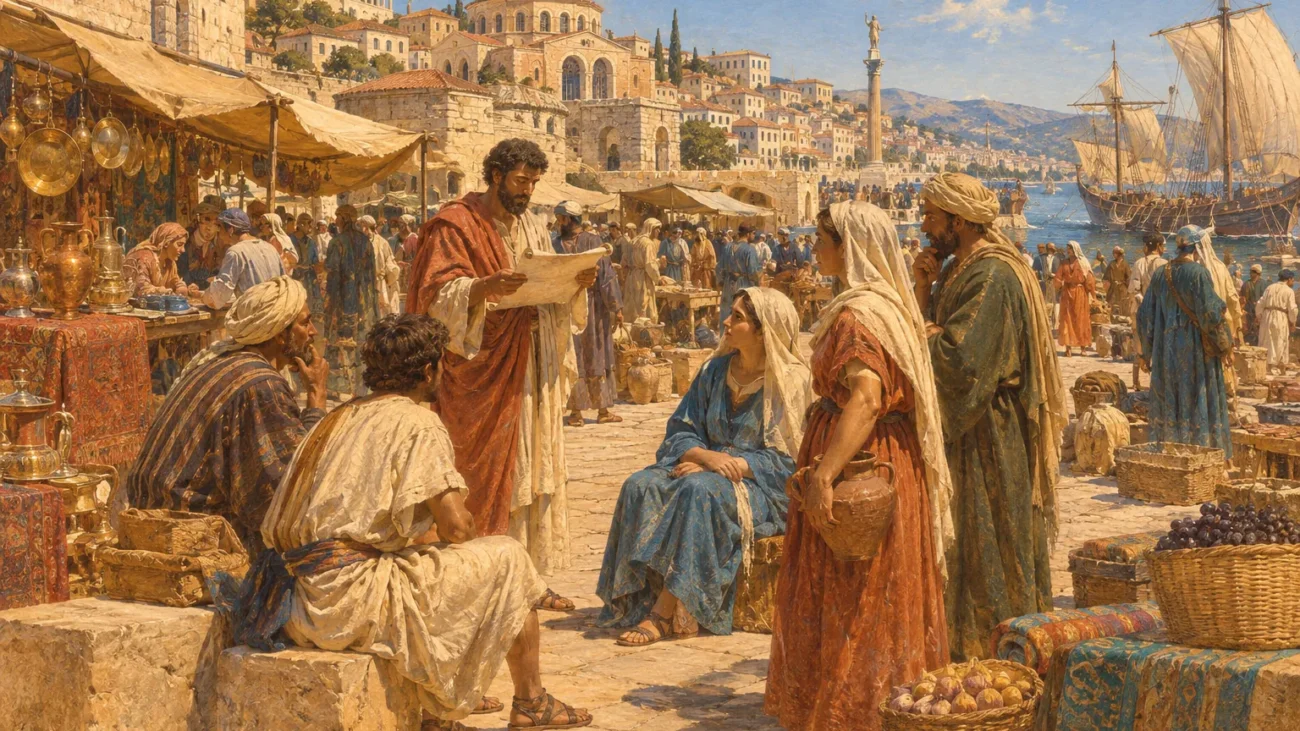
Thessalonica lay on the Thermaic Gulf, inside the Roman Empire. Paul visited the city, preached the gospel and won converts. Together they formed a new Christian community. Many of them were probably Gentiles. In fact, Paul writes that they had turned from idols, which suggests they were not Jewish before he came. However, the Acts of the Apostles describes Paul preaching in a synagogue, so scholars still debate the question.
The letter itself is very early. Most scholars date it to around 49–51 AD, during Paul’s 18-month stay in Corinth. For this reason, many regard it as the earliest surviving Christian text. Some early manuscripts, however, say Paul wrote it from Athens. According to these notes, he wrote after Timothy returned from Macedonia with news about the church. Either way, the call to giving thanks in everything first reached people who were still learning the basics of the faith.
Encouragement for a Church Under Pressure
Paul wrote mainly to encourage. His letter stresses hope and practical guidance more than debate. First, he thanks God for the news of their faith and love. He speaks for himself, Silas and Timothy. Then he reminds them how honorably he lived among them. He worked to earn his keep, because he did not want to burden anyone.
The letter also speaks to those who mourn. Paul teaches about mourning those who have died. He explains that the dead will be resurrected before those still living, and that both groups will greet the Lord in the air. In addition, he prepares them for Christ’s return. Only after all this does he give his short commands about joy, prayer and giving thanks in everything. In other words, Paul sets his call to gratitude inside a letter full of hope.
Rejoice Evermore and Pray Without Ceasing
The passage belongs to the section where Paul describes how Christians should behave (5:12–25). There, three brief lines stand side by side:
“Rejoice evermore. Pray without ceasing. In every thing give thanks: for this is the will of God in Christ Jesus concerning you.” (1 Thessalonians 5:16-18)
Each command is short, yet each reaches into all of life. First, Paul calls believers to rejoice evermore. Then he asks them to pray without ceasing. We can read this as a gentle call to keep turning to God throughout the day.
Finally, Paul links giving thanks to God’s will. He says that giving thanks in everything is “the will of God in Christ Jesus concerning you.”
Giving Thanks in Everything, Not for Everything
Many Christians find the word “all” the hardest part. It is easy to give thanks for good gifts. But what about illness, loss, defeat or prayers that seem unanswered? What about small trials too, like an air conditioner that stops working on a holiday weekend? In such moments, gratitude can feel out of reach.
Yet notice the exact wording. Paul writes “In every thing give thanks.” He does not say to give thanks “for it,” but “in it all.” God’s word does not change to fit our circumstances. Rather, his truth rises above them, so that we can rise too.
Hard times also do a quiet work in us. Through them, believers gain strength and perseverance. They learn that true joy does not rest on feelings or outward situations. God loves us, holds us in his hands and is in control of all circumstances that surround our lives, both good and bad.
Giving Thanks in Everything Alongside Prayer
Thanksgiving and prayer also appear together in Philippians, which gives similar counsel:
“Be careful for nothing; but in every thing by prayer and supplication with thanksgiving let your requests be made known unto God. And the peace of God, which passeth all understanding, shall keep your hearts and minds through Christ Jesus.” (Philippians 4:6-7)
Here the same phrase, “in every thing,” returns. The passage urges believers to let their requests be made known to God with thanksgiving. It promises that the peace of God will keep their hearts and minds through Christ Jesus. Similarly, the Thessalonian passage sets prayer and thanks side by side.
Living Out Giving Thanks in Everything Today
The church in Thessalonica was young and waiting for the Lord. Still, Paul asked them to rejoice, to pray and to give thanks. Their story shows that giving thanks in everything can become a daily habit of faith, even for new believers.
We can start small. Each morning we wake up to a new day that God has given. So we can thank him for that gift. Like the Thessalonians, we can choose joy and practice giving thanks in everything, because this is the will of God in Christ Jesus concerning us.
