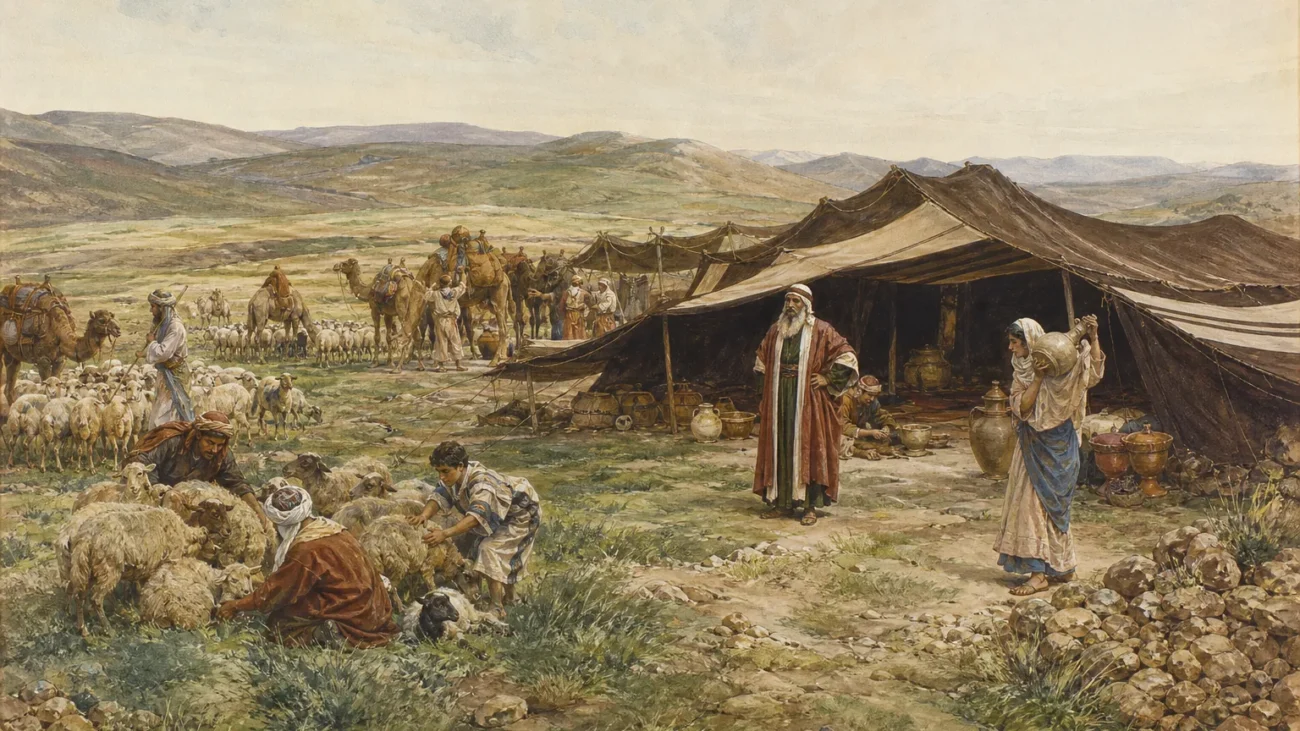
The Book of Job tells the story of a God-fearing man who lost his wealth, his children and his health, yet kept turning toward God. It also faces one of the hardest questions believers ever ask: how can evil and suffering touch the righteous? In this article, we walk through the shape of the book, from Job’s losses to his friends’ speeches and God’s reply. Along the way, we will see how this ancient story invites us to bring our pain honestly before the Lord.
Where the Book of Job Fits in Scripture
The Book of Job belongs to the Ketuvim, or “Writings,” section of the Hebrew Bible. In the Christian Old Testament, it stands first among the Poetic Books. Its Hebrew carries Aramaic influences, so many scholars place its composition in the Persian period, between 540 and 330 BCE. In fact, the poet handled Hebrew in a learned, literary way.
The book also has a careful shape. First, a prose prologue sets the scene. Then poetic dialogues and monologues fill the middle: three cycles of debate between Job and his friends, Job’s laments, a Poem to Wisdom, Elihu’s speeches and God’s speeches from a whirlwind. Finally, a prose epilogue closes the story. Many scholars once treated the prose frame as the original core, with later additions. However, recent study has focused more on the unity of the book as we have it.
Job’s Losses and His Response of Worship
Chapter 1 introduces Job as a righteous man in the land of Uz, blessed with wealth, sons and daughters. Then the scene moves to heaven. There God asks the adversary, ha-satan in Hebrew, about Job’s piety. The adversary claims Job stays faithful only because God has made him happy. Take everything away, he says, and Job will curse God. So God allows him to strip Job of his wealth and to take his children, servants and animals.
Job’s response is astonishing. He tears his mantle, shaves his head and falls to the ground. Yet instead of cursing, he worships:
“Naked came I out of my mother’s womb, and naked shall I return thither: the LORD gave, and the LORD hath taken away; blessed be the name of the LORD.” (Job 1:21)
The narrator then adds a simple verdict: “In all this Job sinned not, nor charged God foolishly” (Job 1:22). In chapter 2, God permits a further trial, and painful boils cover Job’s body. While he sits among the ashes, his wife urges him to “curse God, and die.” Even so, Job asks whether we should accept good from God and not also accept hardship. This opening of the Book of Job shows faith under the heaviest pressure.
Friends Who Spoke Without Comfort
In chapter 3, Job laments. Instead of cursing God, he mourns the night of his conception and the day of his birth. He longs for death, but it does not come. This raw cry stands near the heart of the Book of Job.
Three friends then come to him: Eliphaz the Temanite, Bildad the Shuhite and Zophar the Naamathite. At first they mourn with him for seven days and nights. Afterwards, however, they accuse him of sin and insist that he deserved his suffering. Job answers them with scorn and calls them “miserable comforters.” In his eyes, a just God would not treat him so harshly.
As the debates go on, Job moves away from the calm piety of the prologue. In fact, he begins to rebuke God for the weight of wrath against him. He also widens his gaze to the whole world. The wicked exploit the needy, he says, and God seems to leave them unpunished. Still, Job keeps speaking to God. He protests his innocence, recalls the principles he has lived by and demands an answer.
God’s Answer From the Whirlwind in the Book of Job
Before God speaks, the Book of Job pauses for a poem on wisdom. “Where is wisdom to be found?” it asks, and chapter 28 concludes that wisdom lies hidden from humankind. Then a new figure, Elihu, steps angrily out of a crowd of bystanders. Across chapters 32–37, he argues that wisdom comes from God, who reveals it through dreams and visions.
Finally, in chapter 38, the Lord himself speaks:
“Then the LORD answered Job out of the whirlwind, and said, Who is this that darkeneth counsel by words without knowledge?” (Job 38:1-2)
God does not explain Job’s suffering. Nor does he defend his justice point by point or enter the courtroom Job had demanded. Instead, he turns Job’s eyes to creation. He asks, “Where wast thou when I laid the foundations of the earth?” (Job 38:4). He also recalls the morning stars singing together and the sea he shut in with doors. To the waves he says, “Hitherto shalt thou come, but no further” (Job 38:11). In this way, God sets Job’s weakness beside divine wisdom and power.
Job’s Confession and Restoration
Job replies briefly, and then God continues speaking. Later, in Job 42:1-6, Job gives his final answer. He confesses that God can do everything and that no thought escapes him. He admits that he spoke of “things too wonderful for me, which I knew not” (Job 42:3). Then comes one of the most beautiful lines in the Book of Job:
“I have heard of thee by the hearing of the ear: but now mine eye seeth thee.” (Job 42:5)
Job then repents in dust and ashes.
The epilogue then turns to the friends. God tells Eliphaz that he and his two companions have not spoken rightly of him, as his servant Job has. So they must offer a burnt offering, with Job as their intercessor. Afterward, Job’s health is regained and his fortunes are restored twofold. Job again has the same number of sons and daughters as before. He even lives to see his descendants to the fourth generation.
Turning to God in Suffering: Lessons From the Book of Job
A lament is a prayer in pain that leads to trust. The Book of Job shows exactly this kind of prayer. Job questioned and protested, yet he addressed his words to God. In the end, God said that Job, unlike his friends, had spoken what is right.
The Book of Job invites us to carry our pain toward the Lord rather than away from him. It also warns us gently against the quick verdicts of Job’s friends. When others suffer, we can remember how those friends first mourned with Job for seven days and nights. Above all, the story reminds us that God is greater than our understanding. Like Job, we may not receive every explanation. Yet we can still pray, “the LORD gave, and the LORD hath taken away; blessed be the name of the LORD.”
