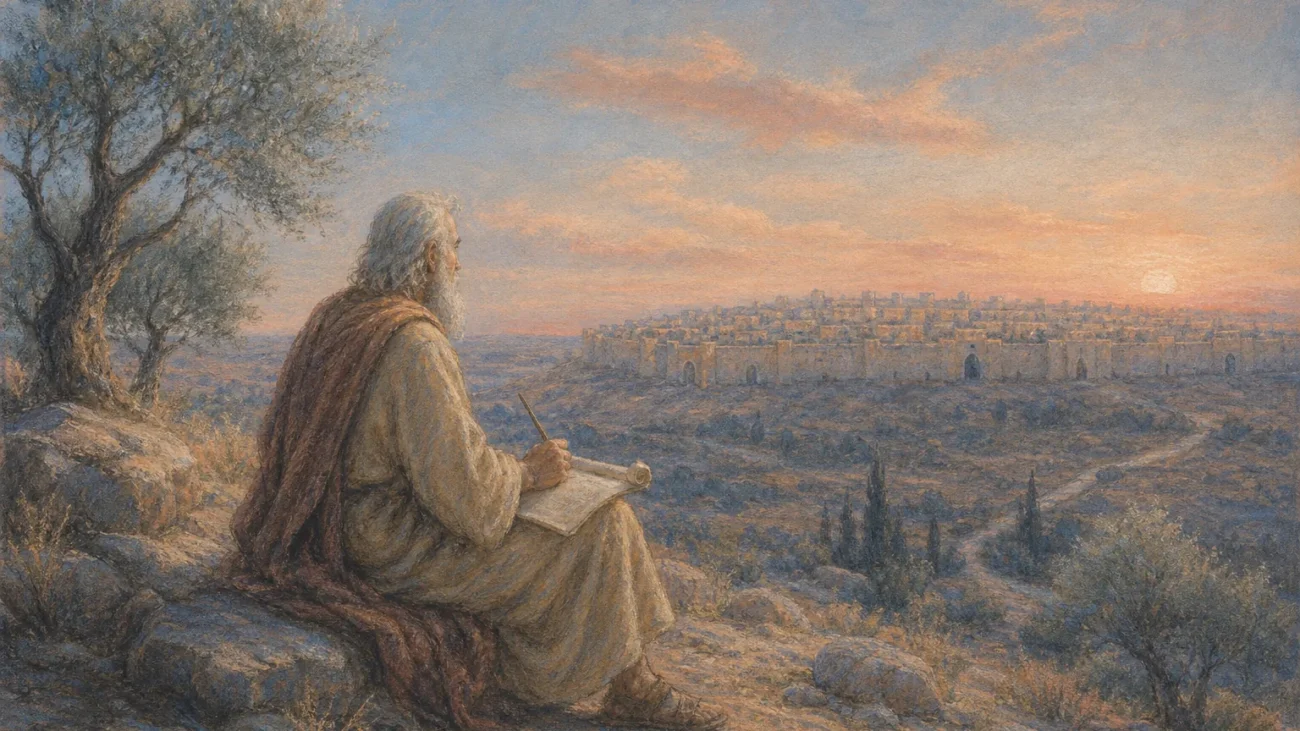
The new Jerusalem shines at the heart of the closing chapters of the Bible. In Revelation 21, John sees a holy city coming down from God, and he hears a promise that God himself will live among his people. For believers who carry grief or weariness, this vision offers deep comfort. In fact, it gathers up hopes that God’s people treasured for centuries. So let us walk slowly through the passage and listen to what it tells us about the hope of heaven.
A New Heaven and a New Earth
John’s vision begins with a sweeping change. He writes:
“And I saw a new heaven and a new earth: for the first heaven and the first earth were passed away; and there was no more sea.” (Revelation 21:1)
Notice what John sees. The first heaven and the first earth give way, and something fresh takes their place. He also records one striking detail: there is no more sea. Instead, he moves straight on to the city that will fill the rest of his vision.
This opening sets the tone for everything that follows. Later in the passage, the one who sits on the throne declares, “Behold, I make all things new” (Revelation 21:5).
The New Jerusalem Comes Down Like a Bride
Next, John describes the city itself:
“And I John saw the holy city, new Jerusalem, coming down from God out of heaven, prepared as a bride adorned for her husband.” (Revelation 21:2)
The direction matters. The city comes down from God out of heaven. In addition, John compares it to a bride adorned for her husband. Revelation also calls this place the Heavenly Jerusalem, and other books of the Bible speak of Zion.
Then a great voice from heaven speaks. God’s tabernacle is with men. He will dwell with them, they will be his people, and God himself will be with them as their God (Revelation 21:3). In other words, the heart of the vision is the presence of God among his people.
God Will Wipe Away Every Tear
Few verses in Scripture have comforted grieving hearts like this one:
“And God shall wipe away all tears from their eyes; and there shall be no more death, neither sorrow, nor crying, neither shall there be any more pain: for the former things are passed away.” (Revelation 21:4)
Here God himself wipes away tears from the eyes of his people. Death, sorrow, crying and pain all belong to the former things, and those things are passed away.
Then the one on the throne speaks again. He tells John to write, because these words are true and faithful. He also says, “It is done. I am Alpha and Omega, the beginning and the end” (Revelation 21:6). Similarly, he promises to give the thirsty a drink from the fountain of the water of life freely. Finally, he declares that the one who overcomes will inherit all things, and God will be his God (Revelation 21:7).
Roots of the New Jerusalem in the Prophets
John’s vision did not appear out of nowhere. In fact, the Book of Ezekiel contains the first record of the new Jerusalem. Ezekiel 40–48 gives a long and careful description of the Temple’s measurements, chambers, porticos and walls. Then Ezekiel 48:30–35 lists twelve gates, each named for one of Israel’s tribes. Ezekiel also gives the city a name: YHWH šāmmā, meaning “YHWH [is] there.”
Later prophets carried this hope forward. For example, Zechariah speaks of a wall of fire protecting a great population. While Ezekiel focuses mainly on human Temple building, Zechariah shifts the focus to God’s own intervention. Isaiah, in turn, pictures a Jerusalem adorned with sapphires, jewels and rubies. He describes it as a place free from terror and full of righteousness.
This hope often grew in seasons of conflict. For instance, Nebuchadnezzar’s army destroyed Jerusalem in 586 BCE and burned the First Temple. Ezekiel’s vision also shaped later writings, including the Book of Revelation, which uses similar measurement language.
The River and the Tree of Life in the New Jerusalem
In the next chapter, John is shown more of the city. He sees a pure river of the water of life, clear as crystal. It flows from the throne of God and of the Lamb (Revelation 22:1). Beside the river, on either side, stands the tree of life. It bears twelve kinds of fruit and yields its fruit every month. Its leaves are for the healing of the nations (Revelation 22:2).
Also, John hears that there will be no more curse. Instead, the throne of God and of the Lamb will be in the city, and his servants will serve him. Then comes perhaps the most tender promise in the whole vision:
“And they shall see his face; and his name shall be in their foreheads.” (Revelation 22:4)
Moreover, there will be no night there, and they need no candle, neither light of the sun. The Lord God gives them light, and they will reign for ever and ever (Revelation 22:5).
Living Today in the Hope of the New Jerusalem
The new Jerusalem is a promise spoken by the one who says his words are true and faithful. He declares, “Behold, I make all things new.” He promises that God will wipe away all tears.
So this passage invites us to trust God in our sorrows and to come to him thirsty. He offers the water of life freely. In addition, it reminds us that God will dwell with his people, and they will see his face. Whatever you carry today, let the vision of the new Jerusalem lift your eyes toward that city, and let it fill you with hope.
