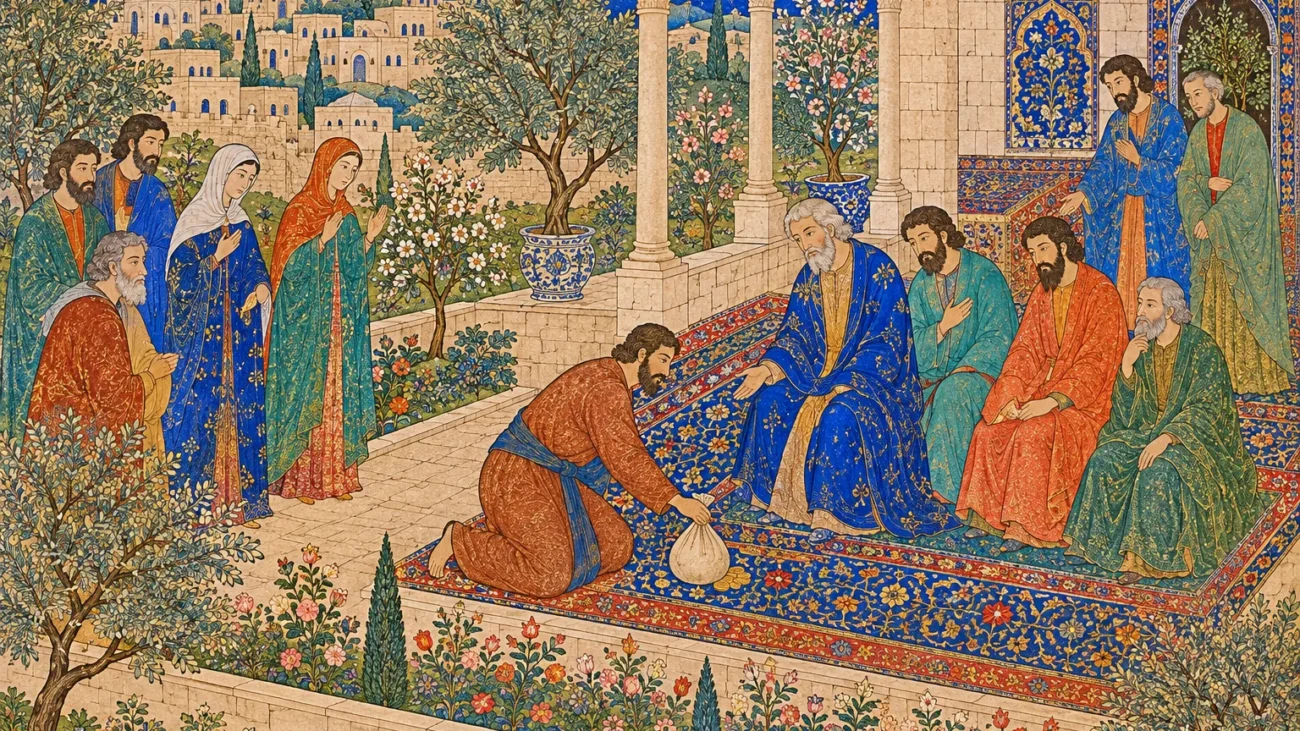
Barnabas, son of encouragement, is one of the warmest figures in the Acts of the Apostles. His parents named him Joseph, yet the apostles gave him a new name that described his heart. In fact, his life shows how one encouraging friend can open doors for others. He gave generously, he stood beside a feared newcomer, and he helped a young church grow. As a result, his story still speaks to believers who want to lift others up.
Who Was Barnabas, Son of Encouragement?
Acts first introduces him as Joses, a Levite from the country of Cyprus. His Hellenic Jewish parents called him Joseph, and Joses is a Greek variant of that name. However, the apostles called him Barnabas. The Greek text of Acts 4:36 explains the name as “son of encouragement” or “son of comforter.” Similarly, the King James Version renders it “The son of consolation.”
Scholars offer more than one theory about the roots of the name. One view links it to an Aramaic phrase meaning “son of consolation.” Another view traces it to an Aramaic phrase meaning “son of the prophet.” Either way, the author of Acts clearly embraces the meaning of encouragement. In Acts 11, he even plays on the name. There, Barnabas, son of encouragement, travels to Antioch and “encourages” everyone to remain in the Lord. So the name and the man fit together beautifully.
A Generous Gift Laid at the Apostles’ Feet
The first deed Acts records about Barnabas is a quiet act of generosity. He belonged to the early Christian community in Jerusalem. He owned land, and he chose to sell it for the sake of others. Then he brought the proceeds to the apostles for the community.
“Having land, sold it, and brought the money, and laid it at the apostles’ feet.” (Acts 4:37)
Notice the order of his actions. First he sold, then he brought, and finally he laid the money down. He did not keep control of the gift or ask for credit. Instead, he placed it at the feet of the leaders and trusted them to use it well. For this reason, his encouragement began with open hands. Barnabas, son of encouragement, teaches us that comfort often starts with practical help. Before he spoke words of cheer, he offered what he had.
Opening the Door for Saul
Later, Saul came to Jerusalem after his conversion and tried to join the disciples. However, the believers were all afraid of him. They did not believe that he was truly a disciple. Their fear made sense, yet it left Saul standing outside the circle.
Then Barnabas stepped forward. Acts describes the moment simply:
“But Barnabas took him, and brought him to the apostles, and declared unto them how he had seen the Lord in the way, and that he had spoken to him, and how he had preached boldly at Damascus in the name of Jesus.” (Acts 9:27)
In other words, Barnabas, son of encouragement, put his own trust on the line. He told the apostles how Saul had seen the Lord on the road. He also explained how Saul had preached boldly at Damascus in the name of Jesus. As a result, the newcomer found a welcome among the apostles. One Bible dictionary writer, Matthew George Easton, even supposed that the two men had studied together in the school of Gamaliel. Whatever their past, Barnabas chose to believe the best and to speak up.
Barnabas, Son of Encouragement, in Antioch
News soon reached the church in Jerusalem about the gospel spreading in Antioch. So the church sent Barnabas there to oversee the work. When he arrived, he did not begin with suspicion or criticism. Instead, he saw the grace of God, and he was glad.
“Who, when he came, and had seen the grace of God, was glad, and exhorted them all, that with purpose of heart they would cleave unto the Lord.” (Acts 11:23)
Here the wordplay on his name comes to life. Barnabas, son of encouragement, urged all the believers to hold fast to the Lord with steadfast hearts. Acts also gives a short portrait of his character: “he was a good man, and full of the Holy Ghost and of faith” (Acts 11:24). In addition, a great many people came to the Lord during his time there. His joy at the grace of God became a channel for that grace to reach others.
From Tarsus to Cyprus: Partnership and Second Chances
Barnabas soon found the work in Antioch large and weighty. Therefore he did something humble and wise. He traveled to Tarsus to look for Saul and brought him back to Antioch. For a whole year the two men met with the church and taught many people. Also, Antioch became the place where people first called the disciples Christians. Afterward, the church sent them to Jerusalem with gifts for poorer believers in Judea.
Later, the two friends traveled to Cyprus and to cities of Pamphylia, Pisidia and Lycaonia. Over time, Acts begins to speak of “Paul and Barnabas” rather than “Barnabas and Saul.” Barnabas had opened the door, and now he let his friend step ahead. He was not perfect, though. At Antioch he followed Peter in drawing back from Gentile believers, and Paul confronted them (Galatians 2:11–13).
Still, his gift for encouragement showed again when Paul planned another journey. Barnabas wanted to take John Mark, his cousin or nephew. However, Paul refused, because Mark had left them on the earlier journey. So the two took separate routes. Paul chose Silas, while Barnabas took John Mark to Cyprus. Yet their friendship endured, since Paul later mentions Barnabas as one who, like himself, earned his own living (1 Corinthians 9:5–6). Years after that, John Mark stood beside Paul as a disciple in Rome (Colossians 4:10).
Living Like Barnabas, Son of Encouragement
The life of Barnabas, son of encouragement, gives believers a simple pattern. First, he gave freely. Then he welcomed a man others feared. Finally, he rejoiced at the grace of God in new believers and urged them to cling to the Lord. Each step opened a door for someone else.
So we can ask ourselves who stands outside the circle today. Perhaps a newcomer needs someone to walk beside them, or a weary friend needs a word of hope. Like Barnabas, we can notice God’s grace in others and say so out loud. In this way, the ministry of encouragement can continue in our own churches and homes.
