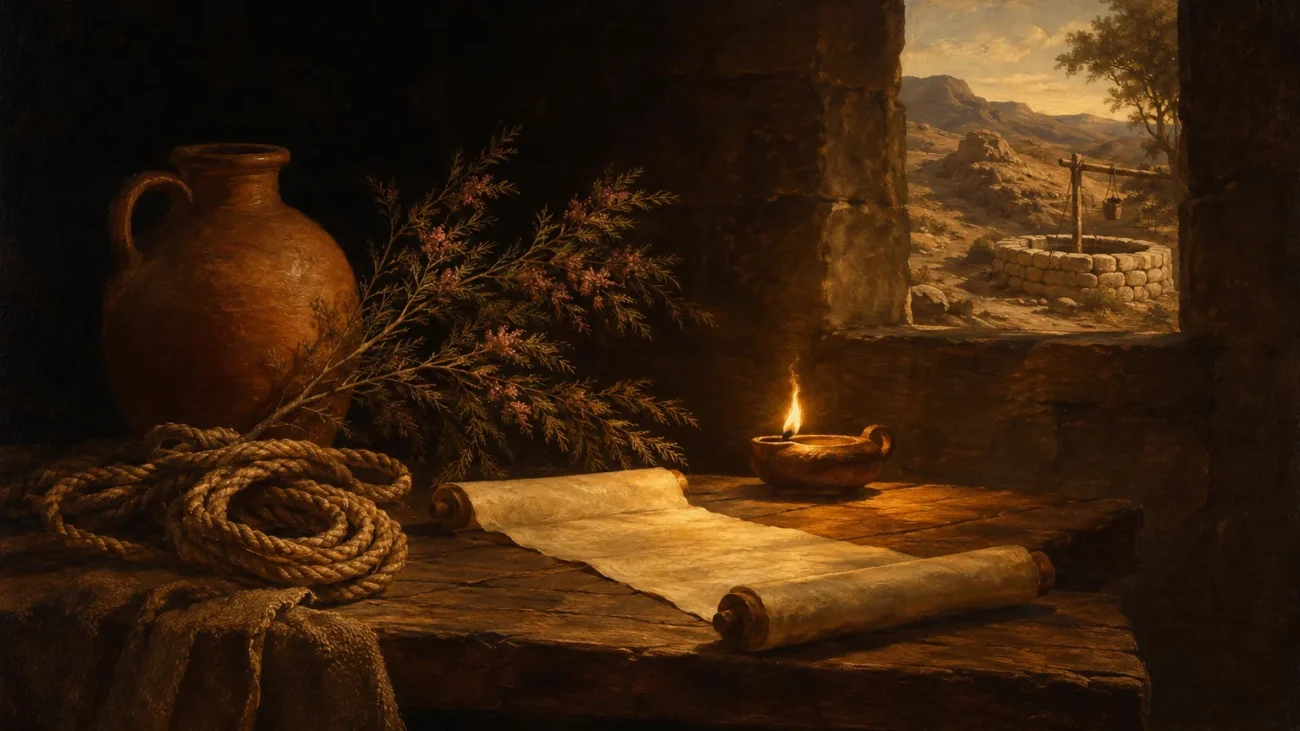
Beersheba in the Bible is far more than a dot on an ancient map. It stands at the edge of the dry Negev, where Abraham and Isaac dug wells, made covenants and called on the name of the Lord. Today it is the largest city in the Negev desert of southern Israel. Yet its story begins much earlier, with wells and water in a dry land. In this article, we walk through the land, the passages and the archaeology that bring this place to life.
The Negev: A Dry Land Named for Hidden Water
The Negev is a desert and semidesert region in southern Israel. In fact, it covers at least 55% of the country’s land area. It is a rocky land of brown, dusty mountains. Dry riverbeds called wadis cut through it, and their plants flower only briefly after rain. The northern areas, including Beersheba, are semi-arid. Even so, the usual rainfall from June to October is zero.
The name itself tells a story. In Hebrew, Negev came to mean “arid land” and also “south.” However, the word seems to come from the Akkadian nagbu, which means “groundwater.” Such water is generally found in semi-arid regions through the digging of wells and cisterns. In addition, the Negev of the Bible covered only the northernmost part of the modern region. Some English translations also spell it Negeb.
Beersheba in the Bible: Abraham’s Well and Oath
The first great scene of Beersheba in the Bible appears in Genesis 21. King Abimelech came to Abraham with Phichol, the chief captain of his host. He said, “God is with thee in all that thou doest” (Genesis 21:22). Then he asked Abraham to swear that he would not deal falsely with him or his descendants. Abraham agreed. Then he raised a complaint about a well that Abimelech’s servants had violently taken away.
Abimelech said he knew nothing about it. Then the two men made a covenant, and Abraham gave him sheep and oxen. Abraham also set seven ewe lambs apart. When Abimelech asked why, Abraham answered:
“For these seven ewe lambs shalt thou take of my hand, that they may be a witness unto me, that I have digged this well.” (Genesis 21:30)
Because both men swore there, the place was called Beer-sheba (Genesis 21:31). The Hebrew name can mean “well of the oath” or “well of the seven.” Others offered different ideas too. For example, Obadiah Sforno suggested the well is called Seven because it was the seventh dug. Abraham ibn Ezra and Samuel b. Meir suggested that the two naming stories refer to two different cities.
Abraham Calls on the Everlasting God
After the covenant, Abimelech and Phichol returned to the land of the Philistines. Genesis records a quiet but beautiful act of worship:
“And Abraham planted a grove in Beer-sheba, and called there on the name of the LORD, the everlasting God.” (Genesis 21:33)
In this story, the well and the worship stand side by side. Abraham then sojourned in the Philistines’ land many days (Genesis 21:34).
Isaac Returns to Beersheba and Digs Again
A generation later, Isaac walked the same paths. After Abraham’s death, the Philistines had sealed his father’s wells. So Isaac redug them and used the same names his father had used. Then Isaac went up to Beer-sheba (Genesis 26:23). That very night, the Lord appeared to him with a word of comfort:
“I am the God of Abraham thy father: fear not, for I am with thee, and will bless thee, and multiply thy seed for my servant Abraham’s sake.” (Genesis 26:24)
Isaac built an altar there, called upon the name of the Lord and pitched his tent. Meanwhile, his servants dug a well (Genesis 26:25). Isaac also made his own covenant with Abimelech of Gerar. On that same day, his servants reported that they had found water. He called it Shib’a, and the name of the city is Beersheba to this day. Thus the place received its name twice, once through Abraham and once through Isaac.
What Archaeology Reveals About Beersheba in the Bible
The biblical site is Tel Be’er Sheva, about 4 kilometres from the modern city. The Ottomans founded the modern town at the start of the 20th century. Human habitation near present-day Beersheba dates back to the fourth millennium BC. In the Copper Age, people in the area lived in caves, crafted metal tools and raised cattle. Nomadic life in the Negev dates back at least 4,000 years and perhaps as much as 7,000.
During the monarchic era, Beersheba functioned as a royal city. Eventually, however, the Assyrians destroyed it. The wider Negev also carried trade routes in the first millennium BCE. These routes brought frankincense and myrrh from South Arabia, remembered in the Bible as the home of the Queen of Sheba (1 Kings 10:1–10). At one remote crossroads, archaeologists found tombs with alabaster jars and clay incense burners. In later centuries, Beersheba remained a watering place and small trade centre for the nomadic Bedouin tribes of the Negev.
From Dan to Beersheba: A Boundary and a Refuge
Beersheba marked the southern edge of ancient Israel. That is why the Bible uses the phrase “from Dan to Beersheba” to describe the whole kingdom. The town was first assigned to the tribe of Judah, and later it belonged to Simeon (Joshua 15:28; 19:2). The sons of the prophet Samuel served as judges there (1 Samuel 8:2).
The town also appears at turning points in many lives. Jacob had his dream of a stairway to heaven after leaving Beersheba (Genesis 28:10–15). Later, the prophet Elijah took refuge there when Jezebel ordered him killed (1 Kings 19:3). The prophet Amos mentioned the city in regard to idolatry (Amos 5:5; 8:14).
Lessons from Beersheba in the Bible
Beersheba in the Bible reminds us that God meets His people in dry places. Abraham dug a well, made a covenant and called on the everlasting God. Isaac redug the old wells, heard the words “fear not,” and built an altar. In each case, ordinary work and worship stood side by side.
So this desert story invites us to keep digging and keep praying. Our seasons may feel as dry as the Negev in summer. Still, the God of Abraham said to Isaac, “I am with thee.” Above all, we can return to that same Lord today and call on His name with trust.
