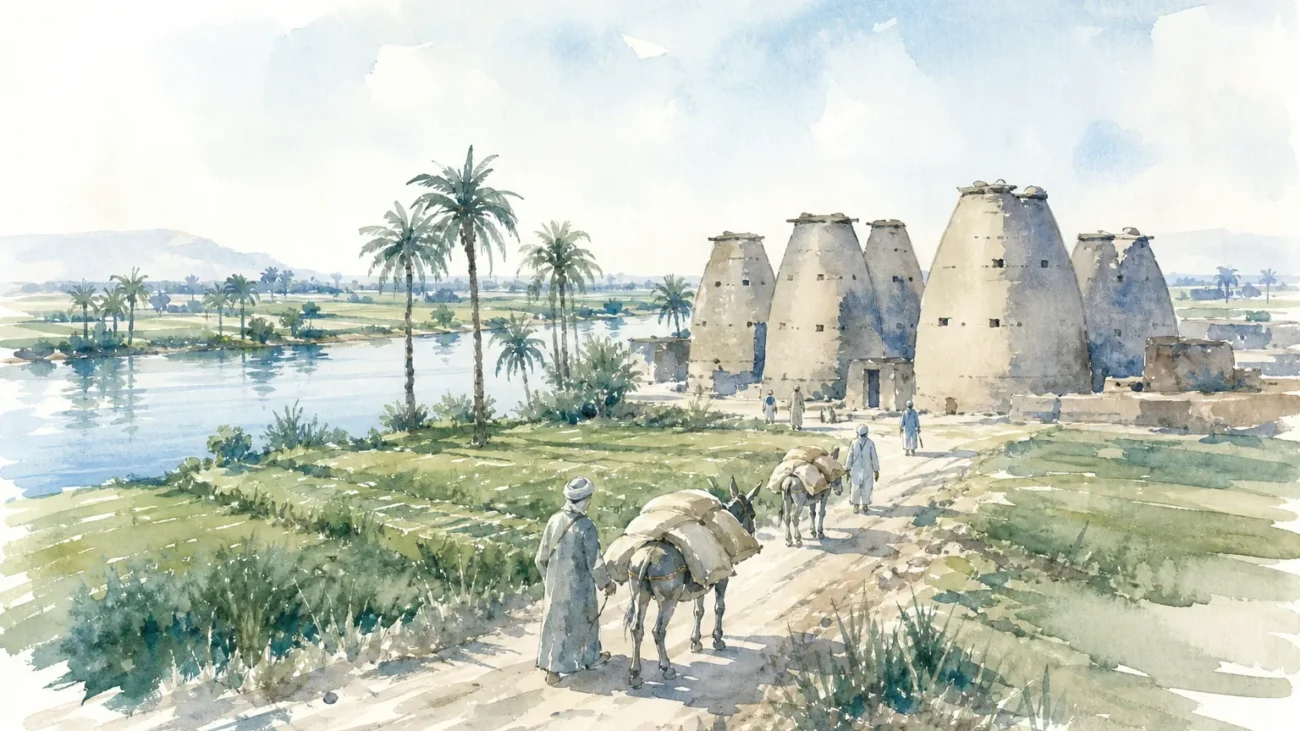
The story of Joseph in Egypt is one of the most moving journeys in the Book of Genesis. It begins with a favored son and a colorful coat. It ends with a ruler weeping over the brothers who betrayed him. In between lie envy, slavery, prison and a sudden rise to power. Yet through every turn, Joseph’s own words point to a God who was quietly at work. Let us follow him from the pit to the palace.
A Favored Son and Two Dreams
Joseph was the firstborn of Rachel and the eleventh son of Jacob. His name means “He shall add.” When Rachel named him, she said, “The LORD shall add to me another son.” (Genesis 30:24). Joseph grew up in the land of Canaan with ten half brothers, one full brother and at least one half sister.
From the start, his father’s love set him apart. Scripture says plainly:
“Now Israel loved Joseph more than all his children, because he was the son of his old age: and he made him a coat of many colours. And when his brethren saw that their father loved him more than all his brethren, they hated him, and could not speak peaceably unto him.” (Genesis 37:3-4)
At seventeen, Joseph tended the flocks with his brothers and reported on their conduct to Jacob. Then he shared two dreams. In the first, his brothers’ sheaves bowed to his sheaf. In the second, “the sun and the moon and the eleven stars made obeisance to me” (Genesis 37:9). As a result, his brothers “hated him yet the more for his dreams, and for his words” (Genesis 37:8). His father rebuked him, yet “his father observed the saying” (Genesis 37:11). Long before Joseph in Egypt, there was a dreaming boy in Canaan.
Betrayed in Dothan: The Road to Joseph in Egypt
Envy soon turned into a plot. In Dothan, most of the brothers wanted to kill Joseph. Reuben, however, proposed throwing him into an empty cistern instead. He secretly hoped to come back and rescue him. The others agreed, unaware of his plan.
Then a camel caravan appeared, carrying spices and perfumes toward Egypt. So the brothers sold Joseph to the merchants. Afterward, they smeared goat’s blood on his coat and showed it to Jacob. Because of this deception, the old father believed his son was dead. In fact, this dark day marks the true beginning of Joseph in Egypt.
Joseph in Egypt: Potiphar’s House and the Prison
Joseph ended up in the house of Potiphar, the captain of Pharaoh’s guard. At first he worked as a servant. Soon, however, he became the superintendent of the whole household. Even as a slave, Joseph in Egypt showed faithfulness and skill.
Then trouble came again. Potiphar’s wife tried to seduce Joseph, and he refused her. Angry that he ran from her, she made a false accusation so that he would go to prison. Once more, Joseph suffered for something he did not do.
Even so, Joseph did not lose his way. The warden put him in charge of the other prisoners. Later, Pharaoh’s chief cupbearer and chief baker joined him there, because they had offended Pharaoh. Both men had dreams, and Joseph asked to hear them.
The cupbearer dreamed of a vine with three branches that budded and produced grapes. He squeezed them into Pharaoh’s cup. Joseph explained that within three days he would return to his post. The baker dreamed of three baskets of bread, with birds eating from them. In contrast, his dream meant death within three days. Joseph asked the cupbearer to mention him to Pharaoh. Yet the restored servant forgot him.
From Prisoner to Vizier of Egypt
Two more years passed. Then Pharaoh dreamed of seven lean cows devouring seven fat cows. He also dreamed of seven withered ears of grain swallowing seven fat ones. None of his advisers could explain the dreams. At last, the cupbearer remembered Joseph, and Pharaoh summoned him.
Joseph explained that seven years of abundance would come, followed by seven years of famine. He also advised Pharaoh to store the surplus grain. As a result, Joseph became vizier, second-in-command in the land. He served under the name Zaphnath-Paaneah. He also married Asenath, the daughter of Potipherah, priest of On.
During the good years, Joseph in Egypt filled the storehouses and had all the produce weighed. In the sixth year, Asenath bore him two sons, Manasseh and Ephraim. When the famine struck, it was so severe that people from surrounding nations came to Egypt to buy bread. Indeed, they went straight to Joseph, and Pharaoh himself directed them to him.
The Brothers Stand Before the Vizier
In the second year of famine, Joseph’s brothers traveled to Egypt to buy food. They stood before the vizier, now in his late thirties, and did not recognize him. Joseph, however, knew them at once. For Joseph in Egypt, this was a moment of deep testing.
He did not speak to them in Hebrew, and he accused them of being spies. When they mentioned a younger brother at home, he demanded that they bring him. This was Benjamin, Joseph’s full brother. Then he held them in prison for three days.
On the third day, the brothers talked among themselves in Hebrew. They spoke of the wrong they had done to Joseph. He understood every word and stepped away, overcome with emotion. Afterward, he kept Simeon bound as a hostage and sent the others home with grain. Later, Jacob’s family came to Egypt and settled in the Land of Goshen, in the eastern part of the Nile Delta.
God Meant It Unto Good: The Lesson of Joseph in Egypt
Years later, Jacob died, and fear gripped the brothers. They said, “Joseph will peradventure hate us, and will certainly requite us all the evil which we did unto him” (Genesis 50:15). So they sent a message asking for forgiveness. Then they fell down before him, saying, “Behold, we be thy servants” (Genesis 50:18). Joseph wept.
“And Joseph said unto them, Fear not: for am I in the place of God? But as for you, ye thought evil against me; but God meant it unto good, to bring to pass, as it is this day, to save much people alive. Now therefore fear ye not: I will nourish you, and your little ones. And he comforted them, and spake kindly unto them.” (Genesis 50:19-21)
These words are the heart of the story of Joseph in Egypt. Joseph does not deny the harm. Instead, he sees it within a larger purpose: God used it “to save much people alive.” He also refuses to take God’s place as judge. Rather, he comforts his brothers and promises to care for them and their children. For this reason, Christian tradition often sees Joseph as a forerunner of Jesus, stressing his virtue and his suffering.
For us, the story of Joseph in Egypt is an invitation to trust. Envy, lies and forgetfulness filled his path. Yet his own testimony shows that evil did not have the last word. When we face a pit or a prison of our own, these passages encourage us to wait and to stay faithful. Above all, like Joseph, we can learn to forgive and to speak kindly to those who wronged us.
